Blind Spades: bid before you look
Bid before you look - Commit your contract blind, then play the hand you're dealt.Deal in for a full match of Blind Spades right in your browser - four players in two partnerships, every bid made sight-unseen, played against opponents who bid and defend like real players. Nothing to download, no account needed: the table below is live, so take a seat and start bidding.
How Blind Spades works
The short version: Bid before you look - Commit your contract blind, then play the hand you're dealt. You play with four players in two partnerships, every bid made sight-unseen, using one standard 52-card deck, dealt thirteen to a hand, and it is high-variance and nerve-testing.
Blind Spades flips the game's most careful step on its head: you commit your bid before you ever see your cards. Each player calls a number sight-unseen, the two partners' calls combine into a team contract, and only then do you pick up the thirteen cards you must now go make. It is Partnership Spades with the safety net of the bidding phase removed. That blind commitment injects a jolt of pure chance into an otherwise skill-heavy game, and it shifts all the skill into the play. Since you cannot tailor your bid to your hand, every point comes from wringing exactly your contract out of whatever you are dealt - Making a thin blind bid you would never have chosen, or throwing away tricks to avoid overshooting a low one. It is a fast, sociable, high-variance way to play that keeps even a lopsided table in the game.
Blind at the table
| Object of the game | Play partnership Spades where every bid is made before you look at your hand. Commit blind with your partner, then play out the contract you are stuck with, racing to the target score. |
|---|---|
| Players | Four players in two partnerships, every bid made sight-unseen |
| Cards | One standard 52-card deck, dealt thirteen to a hand |
| How you win the match | First partnership to reach the target score wins |
| Luck vs skill | Moderate - The bid is a gamble, so the whole game rides on the card play |
| Family | House Rules |
A hand of Blind, step by step
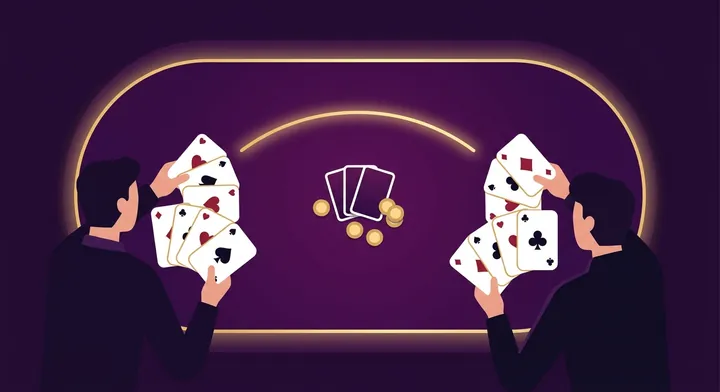
Goal
Play partnership Spades where every bid is made before you look at your hand. Commit blind with your partner, then play out the contract you are stuck with, racing to the target score.
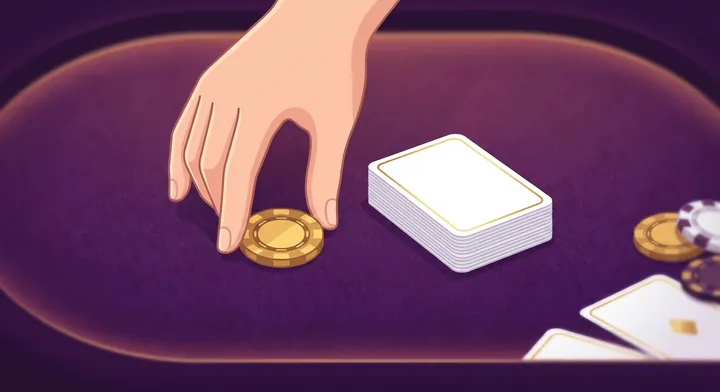
The blind bid
Before the cards are revealed, each player calls the number of tricks they think their side can win. Your call and your partner's combine into one team contract, all decided without seeing a single card.
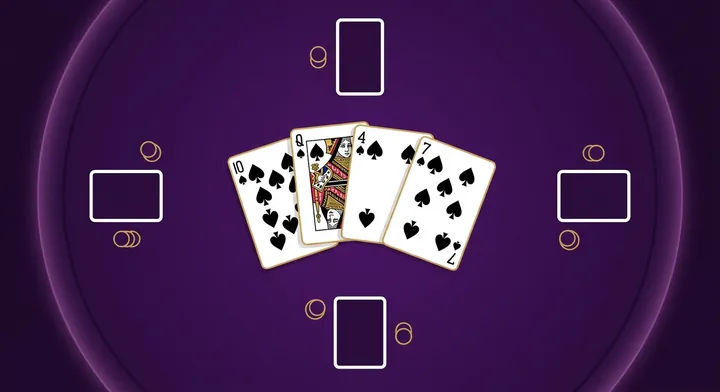
Following suit
Once bids are locked, the hands are revealed and play begins. Follow the led suit if you can, spades are trump and must be broken before being led, and the highest spade or led-suit card wins each trick.
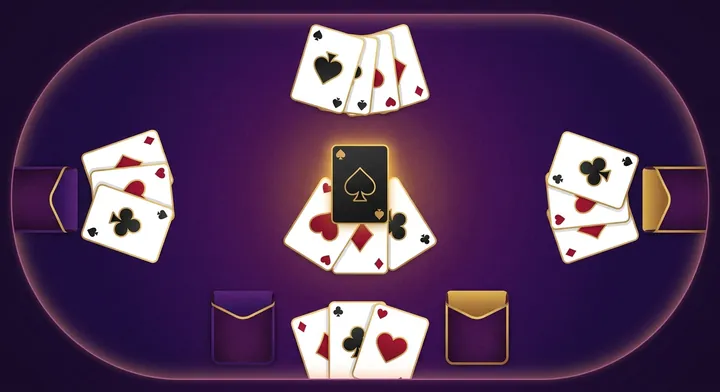
Spades are trump
As always, any spade beats any card of another suit, and a spade cannot be led to a new trick until spades are broken or a player holds nothing else. Managing trumps decides most blind hands.
Scoring
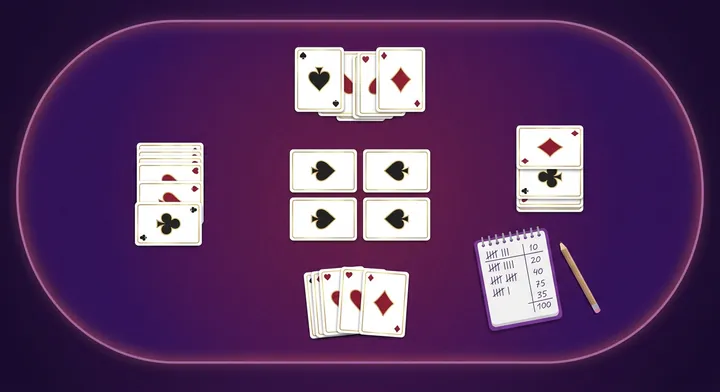
Score exactly as in Partnership Spades: ten per trick bid when the combined contract is made, one per overtrick bag, minus ten per trick when set, and 100 off for every ten bags.
Where Blind comes from
Blind bidding began in Spades as a single dramatic option - The Blind Nil - Offered to teams that had fallen far behind and needed a big gamble to catch up. Playing an entire game with every bid made sight-unseen was the natural extension of that idea, taking the format's boldest moment and making it the whole point.
Blind Spades caught on in casual and social play as a great equalizer. Because no one can tailor a bid to their hand, the format neutralizes the biggest advantage skilled players hold - Reading a hand to bid it perfectly - And keeps mixed-skill tables lively and competitive. The variance it adds is a feature, not a flaw, prized by groups who want every player to feel they have a shot.
It remains a popular house rule rather than a tournament format, exactly because it trades some of the game's deep bidding skill for excitement and inclusiveness. For a quick, sociable, anyone-can-win session, playing the whole game blind is one of the most enjoyable ways to shuffle up a deck of Spades.
Winning Blind: bidding & play
♠ Table wisdom: Bid your fair share, not a hope - Since you cannot see your cards, a sensible blind bid sits near the average of three or four tricks unless the score demands a gamble.
The tips that move the score the most
- Once the hand is revealed, plan the whole play immediately - You are committed to a number, so map exactly which tricks make your blind contract before you play a card.
- Duck aggressively on a low blind bid. If you and your partner called small and drew big hands, deliberately lose tricks to avoid piling up bags past your contract.
- Fight to make a thin blind bid. When the cards fall short of your blind number, squeeze every trick out with careful trump timing rather than conceding the set.
- Coordinate on the score. Blind bidding is a great comeback tool - When you are behind, a bold blind call plus good play can close a gap faster than cautious sighted bidding ever would.
- Protect a blind Nil if your side lands one - A blind call of zero is a huge swing, so the partner covers it exactly as they would a normal Nil, taking the dangerous tricks away.
- Read the revealed hands for the whole table - Because everyone bid blind, no bid tells you anything about anyone's cards, so lean entirely on tracking the cards as they are played.
Advanced Blind tactics
- Anchor your blind bids near the mathematical fair share and adjust only for the score, since with no card knowledge a bid far from average is pure gamble rather than judgment.
- The instant the hands are revealed, re-plan from scratch: your fixed blind contract turns the deal into an exact target, so separate the tricks you must win from the ones you must shed.
- On a low blind bid that meets a strong hand, plan a ducking campaign early, sloughing winners while opponents or your partner take tricks so you do not drown in bags.
- On a high blind bid that meets a weak hand, fight for every trick with disciplined trump timing, because the set penalty makes scraping the contract worth real risk.
- Exploit blind bidding as a comeback engine, choosing the score situations where a bold blind call plus superior play can close a gap that cautious sighted bidding never could.
- Cover a blind Nil exactly as a normal Nil, keeping high cards in reserve to intercept the tricks that would otherwise bust a zero that was committed sight-unseen.
- Discard the auction entirely as an information source and lean wholly on card-counting, since blind bids reveal nothing about any hand at the table.
Ways to play Blind
Blind Nil as a subset
The classic single blind bid - A trailing team's optional sight-unseen Nil for a doubled bonus and penalty - Is the ancestor of full Blind Spades and is often available within it.
Partly blind formats
Some tables have only the trailing team bid blind, or require a blind bid only when behind by a set margin, blending sighted and blind bidding in the same match.
Blind board
Combining blind bidding with the 10-for-200 board rule, where a team may commit to a big jackpot bid without seeing the cards - The highest-variance play in the family.
Standard Partnership Spades
The base game where you study your hand before bidding, trading the excitement of the blind gamble for the deeper skill of an informed auction.
Blind targets
Groups vary the target score for blind games, often shortening it because the high variance already makes matches swing quickly.
Blind questions, answered
What is Blind Spades?
It is Partnership Spades in which every player commits their bid before looking at their hand. You call a number sight-unseen, your partner does the same, the two combine into a team contract, and only then are the cards revealed for play.
How is blind bidding different from Blind Nil?
Blind Nil is a single optional bid of zero made without looking, usually by a trailing team. Blind Spades applies that sight-unseen principle to every bid in the game, so nobody ever sees their cards before committing a number.
Why would anyone bid blind?
For the challenge and the swing. Removing the bidding read turns Spades into a game decided almost entirely by card play, and the built-in gamble keeps a weaker player or a trailing team firmly in contention through sheer variance.
How much should I bid blind?
Because you have no information, a sensible blind bid hovers around the fair share of three or four tricks. Push higher only when the score demands a comeback gamble, and lower when a safe, easily made contract is more valuable than a risky one.
Is Blind Spades mostly luck?
The bid is a gamble, but the game is not. Since you cannot shape your bid to your hand, all of the skill moves into the play - Making thin contracts, ducking to avoid bags, and timing your trumps - So strong players still win over a full match.
Do spades still have to be broken?
Yes. The trump rule is unchanged: you cannot lead a spade to a new trick until spades are broken by an off-suit play, or until spades are all you hold. Trump management is especially important when your bid was a blind commitment.
How is Blind Spades scored?
Identically to Partnership Spades: ten points per trick bid when your combined contract is made, one point per overtrick bag, minus ten per trick when set, and the usual 100-point penalty for every ten bags. Only the way you arrive at the bid changes.
What if my blind bid is way off from my hand?
That is the essence of the format. If your hand is far stronger than your blind bid, you duck tricks to avoid bags; if it is far weaker, you fight with careful play to scrape the contract together. Adapting to the mismatch is where the skill lives.
Can bags still hurt me in Blind Spades?
Yes, and they are a real danger, because a blind bid that lands on a strong hand naturally wins extra tricks. Ten bags still cost 100 points, so deliberately losing tricks beyond your blind contract is a common and important play.
Is Blind Spades good for mixed-skill groups?
Very - Removing the bidding read levels the field, since no one can out-judge the deal, and the variance keeps weaker players competitive. Many groups use it precisely to give everyone at the table a real chance.
Does my partner's blind bid tell me anything?
No, and that is the point. Because every bid is made without seeing the cards, no bid carries information about anyone's hand, so you must rely entirely on watching the cards as they are played rather than reading the auction.
How is Blind Spades different from normal Partnership Spades?
Only the bidding step changes - You commit your number before the cards are revealed instead of after studying your hand. The deal, the trump rule, following suit, Nil and bags are all exactly the same as ordinary Partnership Spades.
Keep learning Blind
Still puzzling over Blind Spades? Read the full Spades FAQ, look up a term like nil or bag in the Spades glossary, or compare Blind with every other version in the complete rules of Spades.
Last reviewed .