Suicide Spades with a Nil every hand
One partner must go Nil every hand - Together you walk the tightrope.Deal in for a full match of Suicide Spades right in your browser - four players in two partnerships, one nil required per team, played against opponents who bid and defend like real players. Nothing to download, no account needed: the table below is live, so take a seat and start bidding.
How Suicide Spades works
The short version: One partner must go Nil every hand - Together you walk the tightrope. You play with four players in two partnerships, one nil required per team, using one standard 52-card deck, dealt thirteen to a hand, and it is high-stakes - every hand rides on a mandatory nil.
Suicide Spades is the most nerve-wracking member of the family, and its rule is exactly as dramatic as the name suggests: on every single hand, one player from each partnership must bid Nil. The other partner is free to bid anything they like, but somebody on your team is always promising to win zero tricks. That mandatory Nil is the pressure at the heart of the game. The result is a constant, high-wire act of coordination. The Nil bidder needs their partner to cover them, winning the tricks they cannot avoid, while that same partner usually has to bid boldly to keep the team's score alive. Two Nils are on the table every hand, so the play is a frantic scramble to protect your own zero while smashing the opponents'. Suicide swings scores violently and is beloved by players who find ordinary Spades a little too tame.
Suicide at the table
| Object of the game | Play partnership Spades where one of the two partners must bid Nil on every hand. Coordinate the forced Nil with a supporting bid and race your team to the target score. |
|---|---|
| Players | Four players in two partnerships, one Nil required per team |
| Cards | One standard 52-card deck, dealt thirteen to a hand |
| How you win the match | First partnership to reach the target score wins |
| Luck vs skill | Very high - Coordinating a forced Nil with a big bid is real teamwork |
| Family | Nil Variants |
A hand of Suicide, step by step

Goal
Play partnership Spades where one of the two partners must bid Nil on every hand. Coordinate the forced Nil with a supporting bid and race your team to the target score.
The deal
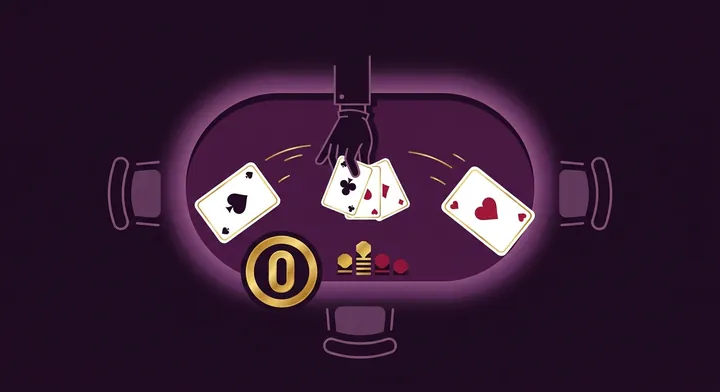
The deck is dealt out thirteen cards to each player as always. Before the bidding, teams know that one member of each pair will have to promise zero tricks this hand.
The forced nil
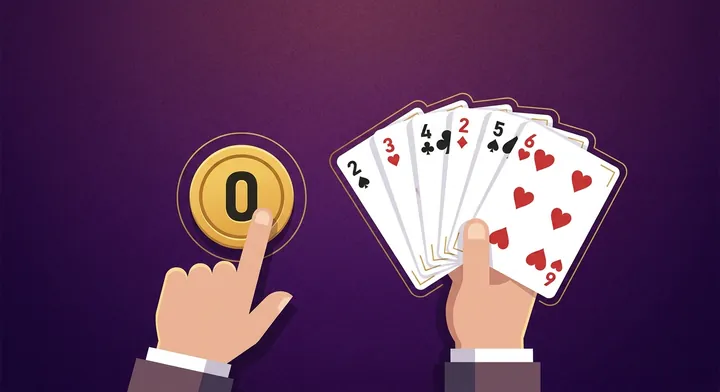
Each partnership must have exactly one Nil bidder every hand. Typically the players decide or the rules fix who goes Nil; the other partner then bids a normal number and tries to cover the Nil.

Blind nil option
A team that is behind may upgrade its forced Nil to a Blind Nil - Bid before looking at the cards - For a larger bonus and penalty, adding an extra layer of gamble to an already tense format.

Scoring
Score the covering partner's bid normally, add the Nil bonus if it holds or subtract the penalty if it busts, and apply bags and the 100-point sandbag rule just as in standard Spades.
Where Suicide comes from
Suicide Spades is a house-rule format that grew out of players wanting more risk and more drama than the standard partnership game offered. By mandating a Nil from each team every hand, it guaranteed the most exciting - And most dangerous - Bid would appear in every single deal.
The variant spread through casual circles and online rooms precisely because of its volatility. Scores lurch up and down as Nils are made and busted, comebacks are always possible, and no lead is ever safe. That swinginess made it a favorite for players who wanted their Spades sessions to feel like a rollercoaster.
Though never a formal tournament standard, Suicide endures as one of the most popular ways to spice up a Spades night. It turns the game's most thrilling bid from an occasional gamble into the mandatory centerpiece of every hand.
Winning Suicide: bidding & play
♠ Table wisdom: Decide who goes Nil fast and for the right reason - The player with the weaker, lower hand almost always makes the safer Nil, leaving the strong hand free to bid big.
The tips that move the score the most
- Cover the Nil before you chase points. As the non-Nil partner, your first duty is to win the tricks your teammate cannot dodge, even if it costs you overtricks or a bit of your own bid.
- Bank a high card in every suit as the covering partner. Those winners are the tools you use to swoop in and take tricks that would otherwise fall on your Nil-bidding teammate.
- Attack the opponents' forced Nil relentlessly. Since they must field a Nil too, leading low to force a trick onto their zero-bidder is often the single highest-scoring play in the hand.
- As the Nil bidder, shed your dangerous middle cards early while someone else safely wins the trick, keeping only your lowest cards for the tricks you must survive.
- Weigh the Blind Nil only when you are truly behind. The doubled bonus is tempting, but committing blind can hand the opponents an easy 200-point swing if it busts.
- Communicate through your leads and discards. With two Nils live every hand, every card you play is a signal to your partner about which suits are safe and which are traps.
Advanced Suicide tactics
- Assign the Nil to the flatter, lower hand and the aggressive bid to the shapely, high-card hand, because the team's whole hand is a package - A safe Nil plus a fat positive bid is the ideal split.
- As the cover, inventory your entry cards before the first lead and ration them so you can intercept a forced trick in any suit the opponents might use to attack your Nil bidder.
- Open your attack on the opposing Nil immediately, leading low in the suit where their zero-bidder is likeliest to hold a stranded middle card, since busting their Nil often outweighs everything else in the hand.
- As the Nil bidder, plan a discard sequence, not just a first discard - Map which suits opponents will attack and keep your lowest card in each of them for as long as possible.
- Coordinate suit signals with your partner so a single early lead tells them which suit is safe for you and which is a trap, because with two live Nils the information war is decisive.
- Reserve the Blind Nil for score situations where a normal Nil cannot close the gap fast enough, and only when your covering partner's hand looks strong enough to shoulder the risk of a blind commitment.
- Balance covering against bags: winning extra tricks to shield your Nil is correct, but track how those forced overtricks are marching your team toward the 100-point sandbag cliff and dump the surplus when you safely can.
Suicide mistakes that cost you points
- Putting the Nil on the wrong hand - The weaker, lower hand should go Nil while the strong hand bids big, so never saddle your best cards with the zero.
- Chasing points before covering the Nil - As the non-Nil partner your first duty is to win the tricks your teammate cannot dodge, even at the cost of overtricks.
- Ignoring the opponents' forced Nil - They must field a zero too, so leading low to bust it is often the biggest scoring play available to you.
- Reaching for Blind Nil while ahead - The doubled swing only makes sense as a catch-up gamble, not when a made hand would keep your lead intact.
Ways to play Suicide
Fixed vs chosen Nil bidder
Tables differ on whether the Nil bidder is predetermined by seat or freely chosen each hand. Letting the team choose adds a strategic layer, since you can put the Nil on whoever holds the weaker cards.
Blind Nil upgrade
Allowing the forced Nil to become a Blind Nil for a trailing team doubles the stakes and is the most common optional rule, giving comebacks an extra gear.
Suicide to 300 or 500
Because scores swing so violently, some groups shorten the target to keep sessions tight, while others keep the traditional 500 to let the wild momentum play out over many hands.
No-cover penalties
Strict house rules that penalize a covering partner who fails to protect an obvious Nil, formalizing the covering duty that Suicide already makes essential.
Whiz-Suicide blend
A hybrid where the non-Nil partner must bid their spade count, combining Suicide's forced Nil with Whiz's forced positive bid for a doubly constrained, play-heavy game.
Suicide questions, answered
What is the core rule of Suicide Spades?
On every hand, exactly one player from each partnership must bid Nil - A promise to win zero tricks. The other partner bids a normal number, so each team always has one Nil and one positive bid, and both Nils are contested during the play.
Why is it called Suicide?
Because forcing a Nil every single hand is a recklessly risky proposition - You are constantly walking a partner out onto a ledge. The name captures how often a busted Nil sends a team's score plummeting.
Who decides which partner bids Nil?
It depends on the table's rules. Some versions let the partners choose, others fix it by seat or alternate it each hand. However it is decided, the key skill is putting the Nil on the weaker hand and the big bid on the stronger one.
Can both partners bid Nil in Suicide?
No - The rule requires exactly one Nil per team, not two. One partner promises zero while the other bids a positive number to keep the team scoring, which is what makes the covering relationship so important.
How does the covering partner help the Nil?
By winning the tricks the Nil bidder cannot avoid. The covering partner keeps high cards in reserve to jump in and take tricks that would otherwise be forced onto their teammate, protecting the Nil bonus.
What is Blind Nil in Suicide Spades?
It is an optional upgrade, usually for a trailing team, where the forced Nil is declared before the player looks at their cards. It doubles both the bonus and the penalty, turning an already tense hand into a genuine gamble.
How is a Suicide hand scored?
The covering partner's positive bid is scored normally for ten points per trick, the Nil adds its bonus if it survives or its penalty if it busts, and bags plus the 100-point sandbag rule apply exactly as in standard Spades.
Is Suicide harder than regular Spades?
It is more volatile and demands tighter teamwork, because a forced Nil every hand means one mistake can cost a hundred points in a heartbeat. Skilled partners who communicate well thrive; loose partnerships get punished quickly.
What makes a good forced-Nil hand?
A hand full of low cards with no awkward middle ranks and, ideally, few or no spades, so you can duck every trick. The worst forced-Nil hands hold stray high cards or lone middling spades that are hard to avoid winning.
How do you beat the opponents in Suicide Spades?
Cover your own Nil flawlessly while attacking theirs. Lead low into the suits where their Nil bidder must eventually win, force the bust, and let your strong-hand partner rack up the positive bid on the other side.
Do bags still matter in Suicide?
Yes. The covering partner often takes extra tricks while protecting the Nil, and those overtricks become bags. Ten bags still cost 100 points, so even in the chaos you have to keep half an eye on your sandbag count.
Can you play Suicide Spades with three players?
Suicide is fundamentally a partnership format, since the forced Nil is a team obligation. It does not translate cleanly to three-handed play, where every player is solo; for smaller tables, the standard three-handed game is the better fit.
Keep learning Suicide
- Suicide Spades: the mandatory Nil, explained
- Blind Nil: the double-or-nothing bid
- Browse the full Spades FAQ
Still puzzling over Suicide Spades? Read the full Spades FAQ, look up a term like nil or bag in the Spades glossary, or compare Suicide with every other version in the complete rules of Spades.
Last reviewed .