6-Player Spades with two decks
Six players, three partnerships, two decks - The biggest table in the Spades family.Deal in for a full match of 6-Player Spades right in your browser - six players in three fixed partnerships, partners seated across the table, played against opponents who bid and defend like real players. Nothing to download, no account needed: the table below is live, so take a seat and start bidding.
How 6-Player Spades works
The short version: Six players, three partnerships, two decks - The biggest table in the Spades family. You play with six players in three fixed partnerships, partners seated across the table, using two standard decks shuffled together - 104 cards, seventeen to a hand, and it is big, social and busy.
6-Player Spades scales the partnership game up to its largest common form: six players split into three teams of two, sitting so each partner faces their teammate across a crowded table. Two full decks are shuffled together into a 104-card pack, and everyone is dealt a generous seventeen-card hand. Because two decks are in play, every card exists twice - There are two aces of spades, two of every rank - Which changes how tricks are won and how confidently you can count. The result is the loudest, busiest branch of the Spades family. With three teams chasing the same pot of tricks, the politics multiply: two partnerships will often find themselves informally cooperating to stop a third from running away with the game. Bidding runs higher to match the bigger hands, the trump suit is deep because there are twice as many spades, and a good memory for which of the paired cards have already appeared is worth its weight in points.
6-Hand at the table
| Object of the game | Team up with the partner across the table in a three-team game. Each hand your partnership bids and tries to make its combined total, and the first team to the target score wins. |
|---|---|
| Players | Six players in three fixed partnerships, partners seated across the table |
| Cards | Two standard decks shuffled together - 104 cards, seventeen to a hand |
| How you win the match | First partnership to reach the target score wins |
| Luck vs skill | High - Reading five other players and a doubled deck rewards sharp memory |
| Family | Table Sizes |
A hand of 6-Hand, step by step

Goal
Team up with the partner across the table in a three-team game. Each hand your partnership bids and tries to make its combined total, and the first team to the target score wins.
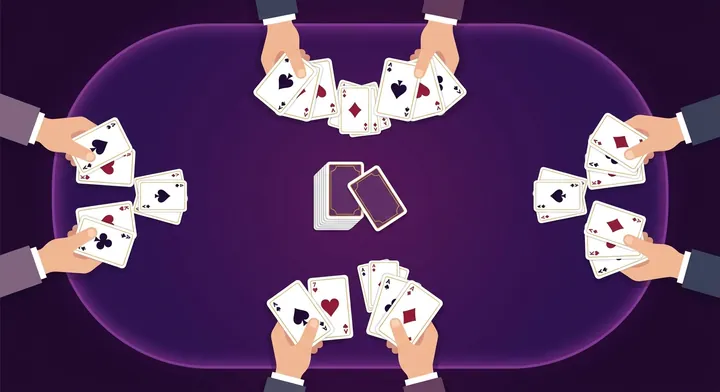
The six-handed deal
Two standard decks are shuffled together into 104 cards and dealt out seventeen to each of the six players. Every card appears twice, so there are two of every rank and suit in play.
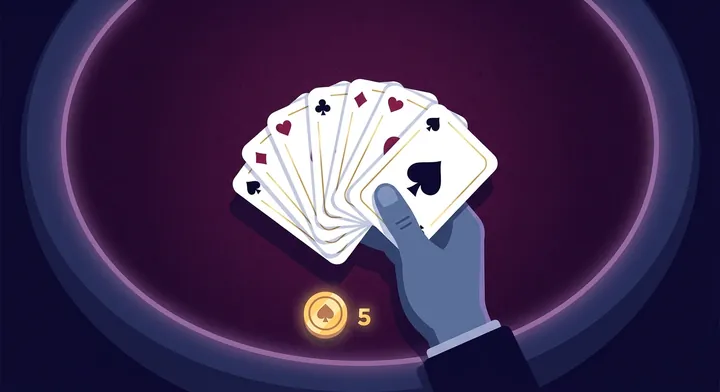
Bidding
Starting left of the dealer, each of the six players bids the tricks they expect to win. You and your partner's bids combine into one team contract, exactly as in the four-player game.
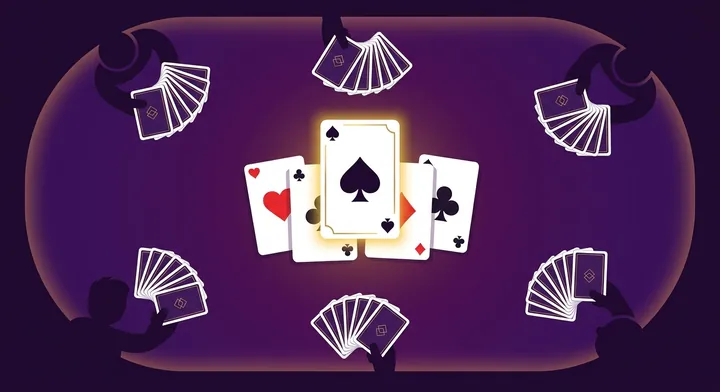
Trumps & tricks
Spades are trump and must be broken before they can be led. The highest spade wins a trick, or the highest card of the led suit; when two identical cards appear, the one played first takes it.
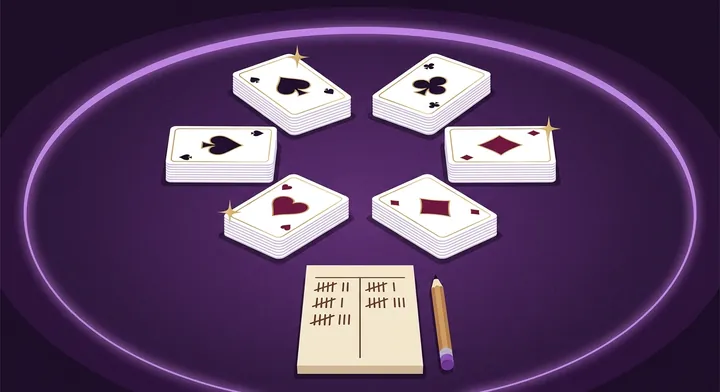
Scoring
Each partnership scores ten points per trick bid when it makes its combined total, plus overtrick bags, minus ten per trick when set, with the usual 100-point penalty for every ten bags.
Where 6-Hand comes from
Six-handed Spades grew directly out of the game's social roots. As Spades spread through American communities as the card game for a full table, players who had more than four eager participants simply added a second deck and a third partnership rather than making anyone sit out.
The two-deck, six-player format became a fixture of large gatherings - Family reunions, cookouts, dorm lounges and community halls - Precisely because it keeps a big group playing together at one table. The doubled deck and seventeen-card hands give it a busier, higher-scoring rhythm than the four-player game while preserving the same bidding and partnership heart.
Though it never became a formal tournament standard, six-handed Spades endures wherever the game is played as a communal event. It is the answer to the happy problem of too many people wanting to deal in, and for many players the loud, crowded six-player table is the definitive way to experience Spades.
Winning 6-Hand: bidding & play
♠ Table wisdom: Bid for a seventeen-card hand, not a thirteen-card one - The bigger hand and doubled deck mean your honours and length are worth more tricks, so scale your numbers up.
The tips that move the score the most
- Remember every card exists twice. Your ace of spades is not boss until the other ace of spades has appeared, so hold your top trumps until the duplicate shows.
- Watch the other two teams' scores, not just your own. When a rival partnership nears the target, expect the third team to help you set them, and be ready to return the favour.
- Plan for a long trump war. With twice as many spades in the pack, the suit takes many rounds to exhaust, so keep a high trump back to control the busy endgame.
- Cover your partner's Nil across a crowded table - With four opponents able to lead into a zero, protecting it takes even more high cards in reserve than in the four-player game.
- Track the paired high cards you have seen; because two kings and two aces of each suit exist, a card that would be safe in one deck can still be beaten by its twin.
- Keep an eye on bags - Bigger hands and heavier trumping generate more overtricks, so a team that grabs greedily can march to the 100-point sandbag penalty faster than it expects.
Advanced 6-Hand tactics
- Recalibrate every bid to a seventeen-card hand drawn from a doubled deck, because your honours and length translate into more tricks than they would in a thirteen-card single-deck hand.
- Track the duplicated top cards relentlessly - With two aces and two kings of every suit, a winner is only truly safe once its twin has been accounted for, so time your big cards around the missing pair.
- Model three separate team scores and the shifting alliances between them, cooperating informally with one rival to set the leader and switching targets the moment the standings change.
- Commit to a long trump campaign, since the two-deck pack roughly doubles the spades in play; retaining a boss trump for the deep endgame is even more decisive than in four-player Spades.
- Protect a partner's Nil with a deeper reserve of high cards, because four opponents rather than two can lead into the zero and the doubled deck makes forced tricks more likely.
- Weigh the accelerated bag math, as bigger hands and heavier trumping generate overtricks quickly; dump surplus tricks deliberately when your team nears the sandbag cliff.
- Use the crowded table's information: with six hands revealing cards each trick, you can reconstruct the remaining pack faster than in a smaller game if you pay attention to which twins have fallen.
Ways to play 6-Hand
Handling the two spare cards
Dealing seventeen to six players leaves two cards over; tables differ on whether to remove them, set them aside as a small kitty, or reshuffle, which slightly changes the information available.
Target 300 or 500
Because six-player hands score quickly, a target of 300 keeps a big-table session brisk while the traditional 500 lets three-way momentum swings play out over many hands.
Nil and Blind Nil at the big table
Some six-handed games keep Blind Nil as a comeback option for a trailing team, adding a high-variance gamble to an already busy format.
Four-player Partnership Spades
The standard game this scales up from - One deck, thirteen-card hands and two teams, tighter and less swingy than the crowded six-player version.
Three-team rotation rules
House rules vary on seating and dealer rotation with three partnerships, which affects who leads and bids first as the game goes on.
6-Hand questions, answered
How many players and cards does 6-player Spades use?
Six players in three partnerships, using two standard 52-card decks shuffled together for 104 cards. Each player is dealt seventeen cards, so there are seventeen tricks in every hand and every card in the pack exists twice.
How are the teams arranged with six players?
Three teams of two, with each pair sitting directly across the table from one another so partners alternate with opponents around the circle. Your bids combine with your partner's into a single team contract, just as in four-player Spades.
What happens when two identical cards are played to a trick?
Because two decks are used, a trick can contain two of the same card - Say two aces of spades. The card played first wins the tie, so leading or playing a big card early can matter when its twin is still out there.
Does the two-deck pack change the trump suit?
Yes. With two decks there are twice as many spades, so the trump suit is much deeper and takes many more rounds to run out. Trump control and counting which spades have appeared become even more important than in the single-deck game.
How high should I bid in six-handed Spades?
Higher than in the four-player game, because seventeen-card hands hold more honours and length. Count your near-certain winners first, then add for long suits, and expect team totals to run larger to match the bigger hands.
Can three teams really cooperate against one?
There are no formal alliances, but two trailing partnerships will often informally cooperate to stop a leading team from reaching the target, then compete once the threat passes. Reading those shifting, temporary alliances is a big part of six-handed play.
Do spades still have to be broken?
Yes. The trump rule is unchanged - You cannot lead a spade to a new trick until spades are broken by an off-suit play, or until spades are all you hold. With so many trumps in the doubled deck, timing that first spade is a real decision.
Is Nil harder with six players?
It is riskier, because four opponents can lead into your Nil instead of two, and the doubled deck makes stray high cards more common. A six-handed Nil needs a genuinely safe collection of low cards and an attentive partner to cover it.
How is scoring different in the six-player game?
It is not - Each partnership scores exactly as in four-player Spades: ten per trick bid when made, one per overtrick bag, minus ten per trick when set, and 100 off for every ten bags. There are simply three separate team scores instead of two.
Why are only seventeen cards dealt from 104?
Seventeen cards to six players uses 102 of the 104, leaving two cards out so the deal comes out even. Some tables handle the two spare cards differently, but dealing seventeen each is the simplest way to split a two-deck pack among six players.
Is six-handed Spades a good party game?
It is one of the best, because it seats a large group at a single table and keeps everyone involved through bidding, partnership play and three-way rivalry. The busy, social atmosphere is exactly why the six-player game is a cookout and family-reunion favourite.
How long does a six-player game take?
Longer than the four-player game, since seventeen-card hands take more time to play and three teams are chasing the target. A match to 300 usually runs several lively hands; pick a lower target if you want a quicker session.
Keep learning 6-Hand
Still puzzling over 6-Player Spades? Read the full Spades FAQ, look up a term like nil or bag in the Spades glossary, or compare 6-Hand with every other version in the complete rules of Spades.
Last reviewed .